


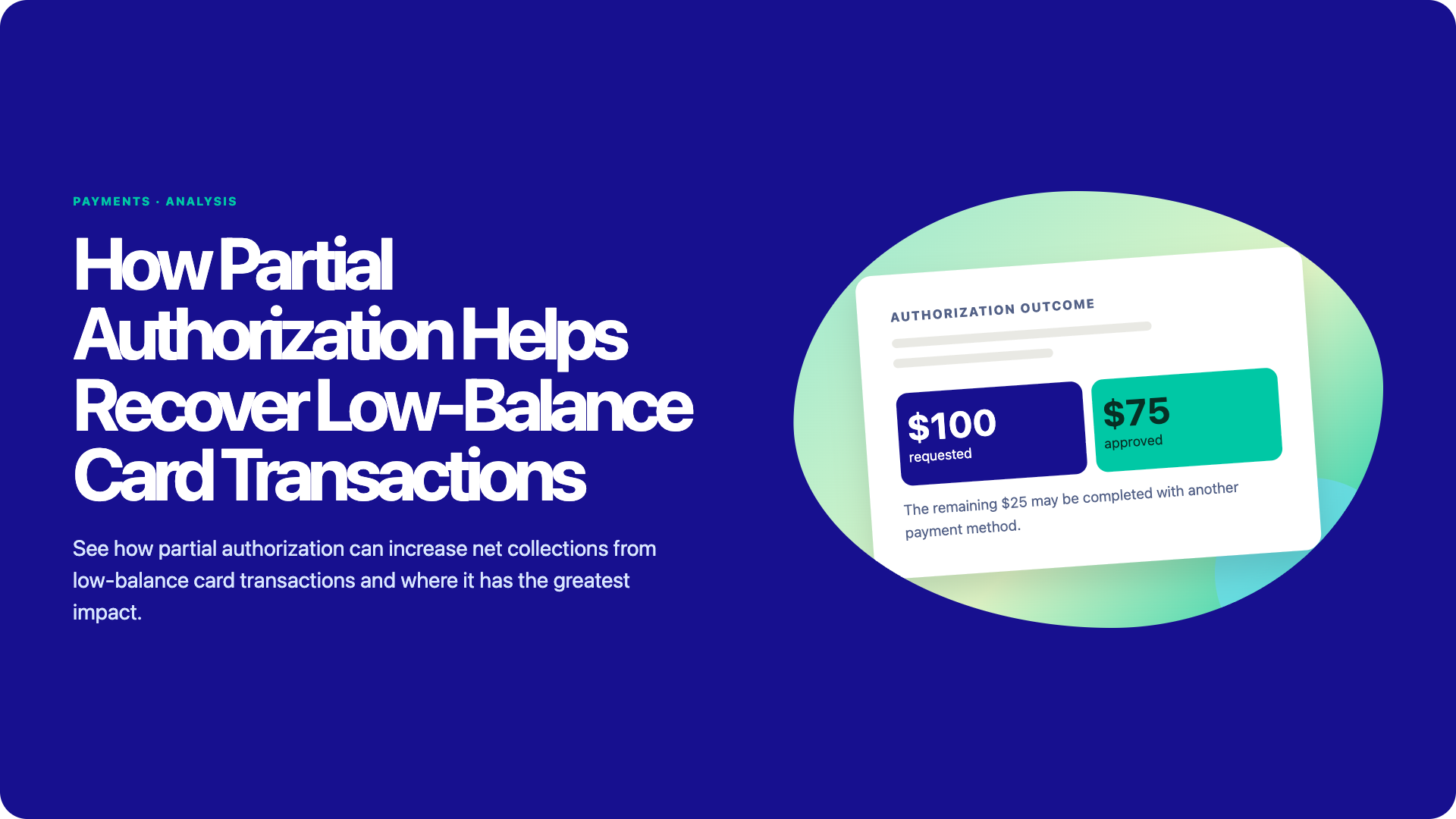
- Recover available funds. Partial authorization lets an issuer approve the available card balance instead of declining the full request. Where split tender is supported, the customer can pay the remainder another way.
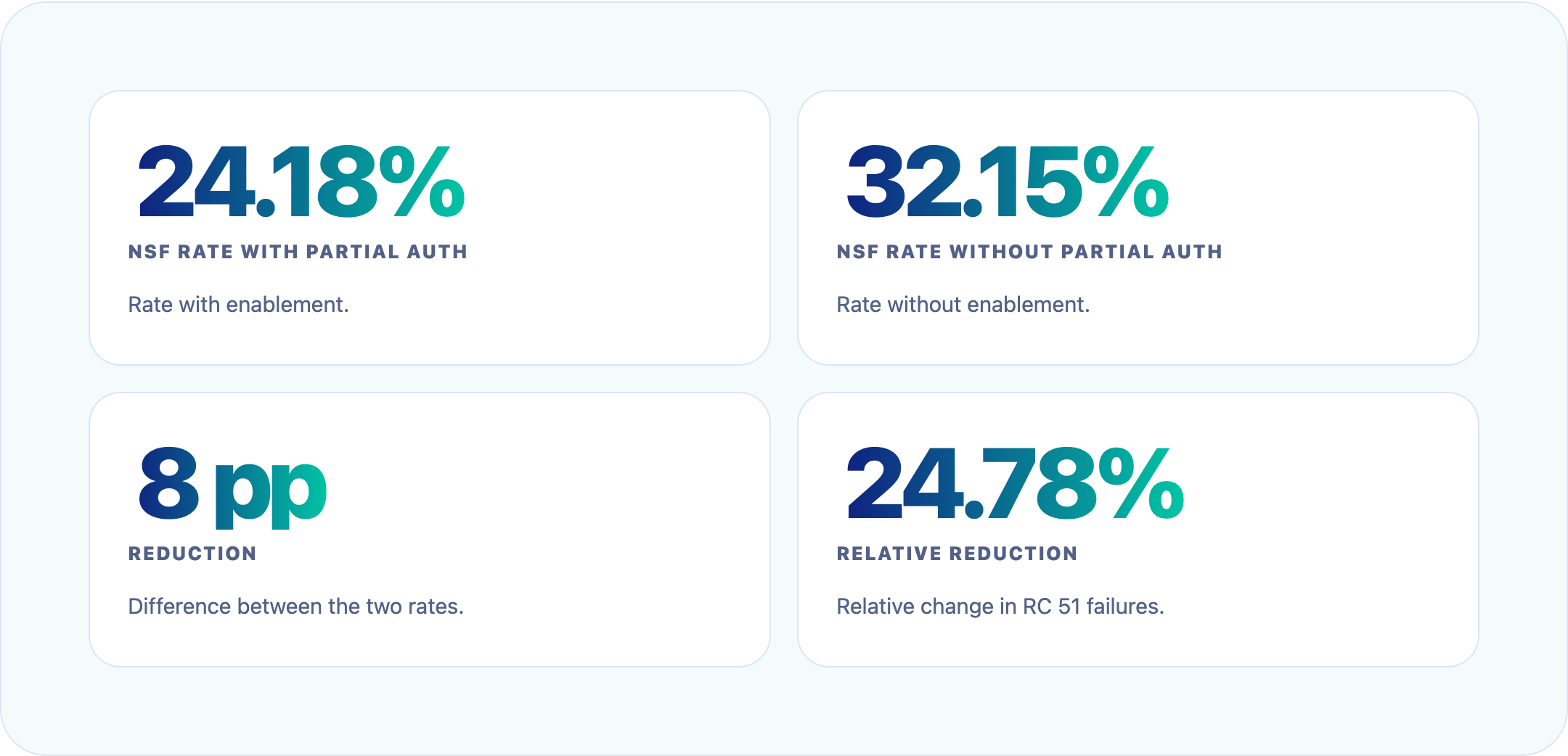
- Reduce insufficient-funds declines. In TabaPay’s analysis, the RC 51 decline rate was 24.18% with partial authorization, compared with 32.15% without it. That is about 8 percentage points lower. Partial approvals increased collected funds by 3% to 16% across the clients and use cases evaluated.
- Evaluate results by segment. Performance varied by issuer and ticket size. Approval lift was strongest near $200, while partial approvals near $1,000 recovered the largest share of the requested amount.
When the card’s available balance is less than the purchase amount, a standard authorization may decline the transaction. Partial authorization changes that decision and allows the issuer to approve the amount available on the card, leaving the customer to cover the remainder with another method.
For example, a $100 transaction might receive a $75 approval. Without a way to complete the balance, the merchant still may not capture the sale. Partial authorization enables split tender by allowing a customer to apply the available card balance and cover the remainder with another payment method.
Partial authorization can increase collected funds
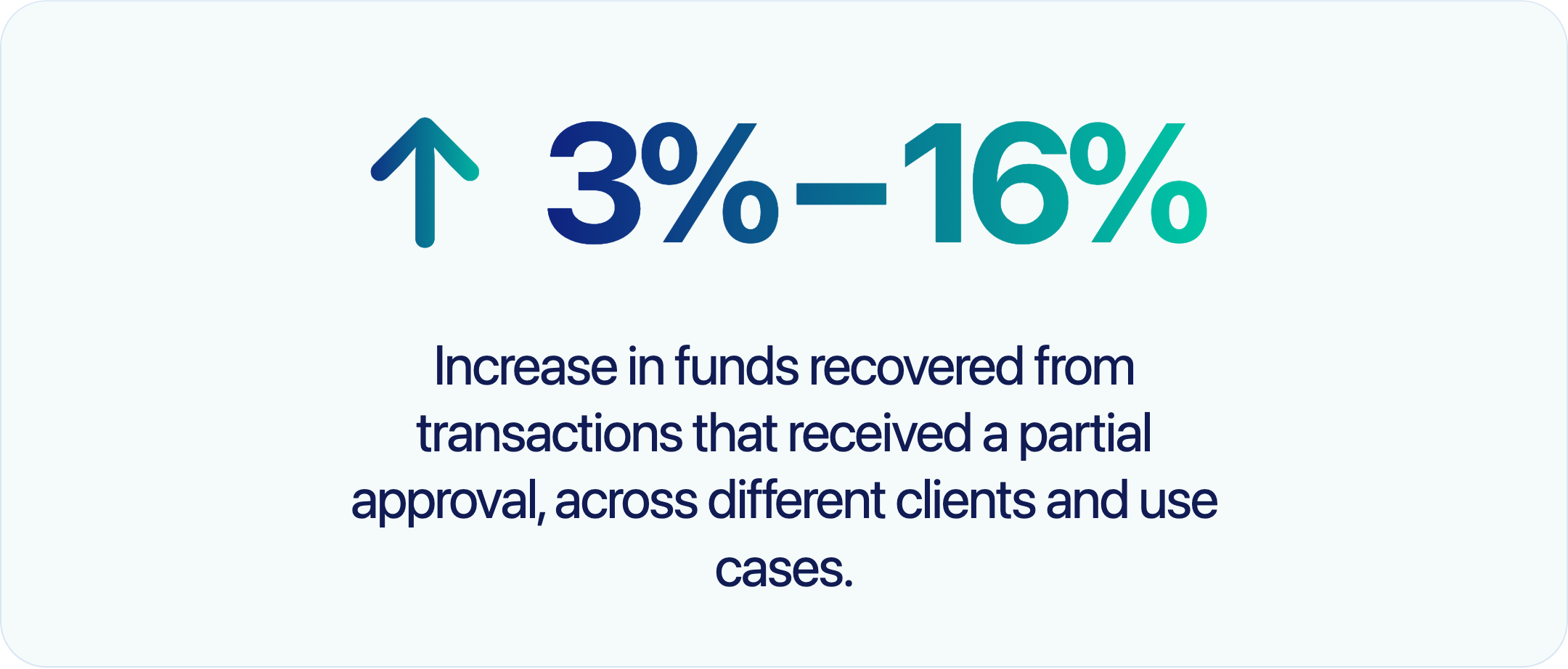
Over the January 2025 through June 2026 analysis period, partial authorization made approximately $55.1 million in funds available for collection across TabaPay clients. Across the clients and use cases evaluated, transactions that received a partial approval increased collected funds by 3% to 16%. This reflects funds recovered through the partial approval that otherwise would have been lost to a decline.
The outcome is fewer insufficient-funds declines
RC 51 (Insufficient Funds) is the primary decline code for pull transactions in use cases such as Debt Repayment and Early Wage Access. When a transaction receives a partial approval, the approved amount is collected rather than lost to an insufficient-funds decline. Across TabaPay’s portfolio, we found that partial authorization reduced RC 51 declines by 8 percentage points, from 32.15% to 24.18%, a 24.78% relative reduction.
Partial-authorization rates may vary by issuer
The issuers highlighted below represent the highest-observed partial-authorization results in the analysis. On average, 4.33% of their transactions received a partial authorization, compared with 2.64% across the full portfolio. A transaction is counted as partial authorization only when the approved amount is less than the requested amount.

This variation means a portfolio-wide average can obscure where partial authorization is most likely to create value.
Issuer results vary among those evaluated

Partial-authorization success was not widespread among the issuers evaluated. Approximately 35% of issuers for which partial-authorization transactions were attempted did not produce a single partial approval across the reviewed portfolio, while 65.01% produced at least one. Among issuers with no observed partial approvals, credit unions represented 57.23%, and small banks represented 41.73%, suggesting that smaller financial institutions and credit unions may be less likely to accept partial-amount transactions.
Transaction size changes the picture
Partial authorization recovers funds across ticket sizes, but the observed outcomes vary by segment. Lower-ticket transactions show more incremental approvals, while partial approvals near $1,000 recover the largest share of the original request.
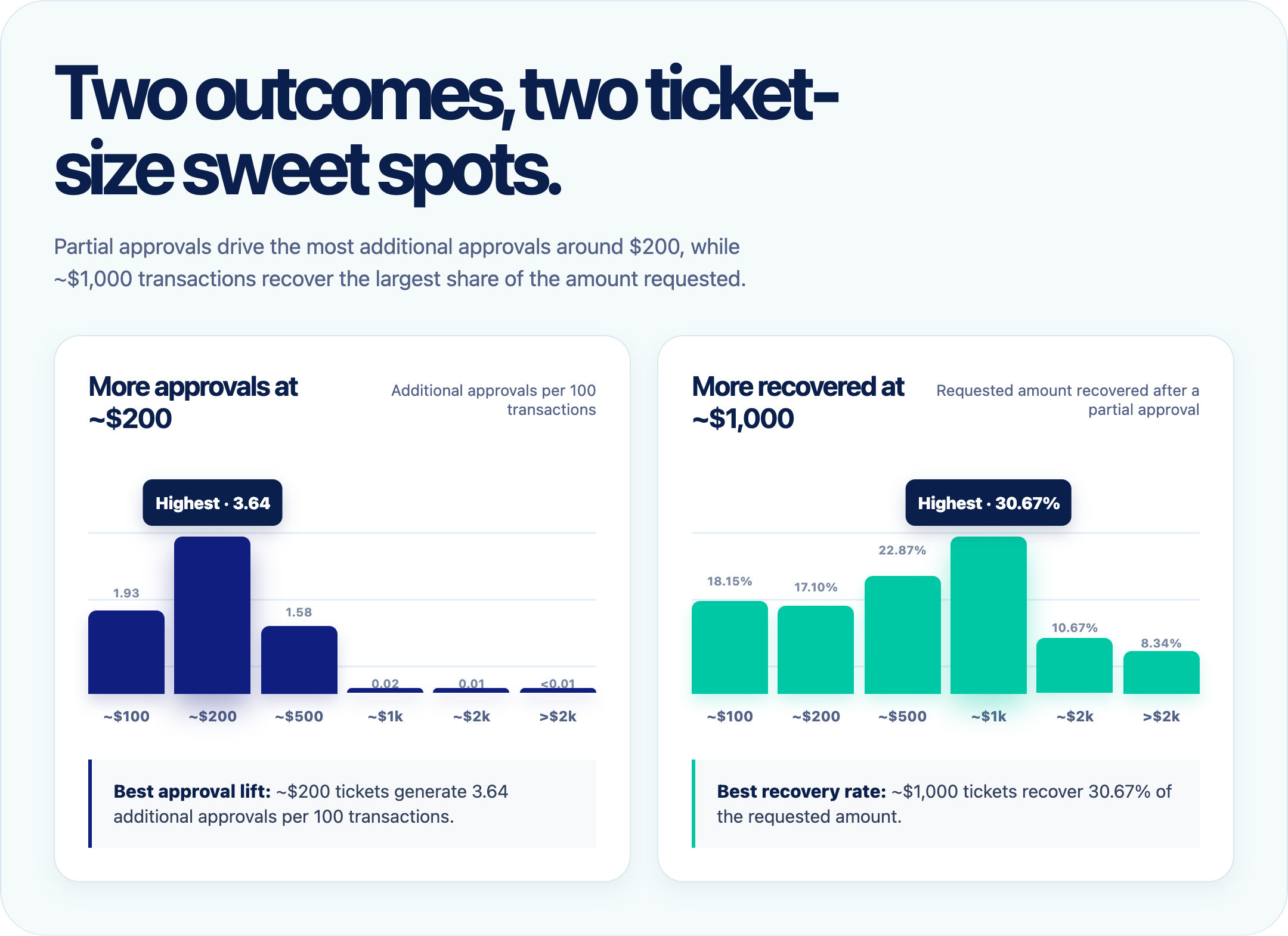
These rates describe observed performance within each ticket-size segment. They do not show total portfolio impact, which also depends on transaction volume, issuer and client mix, and the frequency of partial approvals in each segment.